Project 01
Turn messy sales data into a useful report
Clean and structure messy business data, identify what matters, and build a report that helps management understand sales performance and trends.
PythonExcel
Stop being limited to operational work. Start showing you can solve supply chain problems with data.
In 12 weeks, build 8 realistic supply chain data projects that strengthen your analytical skills, give you work you can show and defend, and prepare you to take on more analytical responsibility.
Join the bootcamp →Your CV has the diplomas. It says you know supply chain, Excel, or Power BI. But without strong projects, it’s hard to show recruiters or managers that you can actually do the analytical work.
You know the tools and concepts. But when a real problem lands in front of you, identifying what matters, deciding what to analyze, and choosing the right approach can still feel difficult. And that gap affects your confidence.
You want more analytical responsibility, better opportunities, and work where your skills actually matter. But you’re still stuck in operational tasks, spending hours building Excel reports, or doing work that doesn’t challenge you enough.
Exactly. Yet something still feels missing.
At work, you may know the tools but still feel unsure about how to approach a real analytical problem. In a job search, you struggle to stand out because you don’t have enough work that proves you can solve one.
The problem is connected: without enough practice solving real problems, it’s hard to build both the skill and the proof.
That’s why this bootcamp is built around deliberate practice.
Over 12 weeks, you’ll work through 8 realistic supply chain analytics projects, mainly in Python, where you’ll practice combining:
8 realistic supply chain analytics projects
12 weeks · mainly in PythonYou build the skill by doing the work. And the work becomes the proof.
The bootcamp is built around three principles. You learn through realistic supply chain analytics projects instead of spending weeks studying Python before using it.
Reps over just theory.
01Project first. Syntax in the path.
02Build proof, not just knowledge.
03Each project takes 1–2 weeks, depending on its complexity. Tap a step to expand it.
A realistic supply chain or operations problem to solve.
Before coding, you define what is happening, what you need to investigate and what matters.
We introduce the concepts needed for that project, with the full coding foundations available if you need them.
Step-by-step notebooks guide the technical work without removing the thinking.
Use AI to debug and question your reasoning, get help from the community, and bring harder problems to our live Q&A sessions every two weeks.
The goal is not to give you the answer. It’s to help you keep moving while still learning how to think through the problem yourself.
Coding videos take you through our approach so you can compare your reasoning and execution.
You complete the final output by the deadline.
The lessons are pre-recorded, so you can work around your schedule, but the bootcamp has a clear rhythm and deadlines.

Most projects are built in Python, combined with Excel and SQL, with one project focused on Power BI. Each starts with a realistic supply chain or operations problem you must identify before touching the data.
Clean and structure messy business data, identify what matters, and build a report that helps management understand sales performance and trends.
Navigate a relational database, extract the data you need with SQL, calculate key inventory KPIs, and turn the results into a clear performance report.
Evaluate underperforming inventory and build a decision model that recommends what action to take for each product.
Create and compare forecasting models, measure their accuracy and bias, and communicate both the expected demand and the uncertainty around it.
Use regression to test each process condition against the failure rate, separate the ones that matter from the ones that only look like they do, and put a number on the effect.
Transform a correct but confusing analysis into a clear visual that makes the key finding and business decision immediately understandable.
Create an interactive dashboard that moves from high-level performance to the specific source of a production issue.
Bring together the analytical thinking, technical skills and communication skills developed throughout the bootcamp, and automate the result into a tool your team can run without you.
Additional projects you can work through beyond the bootcamp weeks to keep extending your portfolio.
Define meaningful thresholds, classify your product portfolio and identify the inventory that requires attention.
Transform unstructured business records into usable data, classify the product portfolio and identify the products that matter most.
Investigate operational data to identify where service problems and rising logistics costs are coming from, then communicate the causes clearly to management.
Analyze transaction data to identify meaningful product combinations and turn those patterns into useful recommendations for the business.
Analyze large volumes of written feedback to uncover customer sentiment, recurring themes and the areas the business should investigate first.
There is nothing worse than solving the wrong problem. Before going deeper into optimization, simulation or machine learning, you need to get the fundamentals right. Throughout the projects you practise these skills repeatedly, so you can confidently move on to more advanced analytical problems.
Beyond the projects, you'll build the core skills needed to analyze problems, communicate insights and work more effectively with data.
Frame the situation, define what to investigate and decide what actually matters. It's the problem identification every project is built on.
The goal: build a strong supply chain analytics foundation around Python, while learning enough SQL, Excel and Power BI to use them when the problem requires it.
As you move through the projects, you get access to short modules covering the coding skills you need at that moment. You learn the code while using it to solve realistic supply chain problems, not in isolation.
Live group sessions to help you turn your projects and new skills into a job.
Rework your resume around the analytical work you can now show.
Position yourself for supply chain roles and build your own network.
Prepare to talk through your projects and reasoning with confidence.
We assume you already know supply chain from your studies or your job. The focus is solving those problems with analytics, not teaching the foundations.

“I got the job offer I wanted after 3 months of building the projects.”
Before joining the program, I had years of experience in supply chain, but I was struggling to find a role that matched my professional and personal goals. The practical projects helped me strengthen my skills and, just as importantly, show what I could do in interviews and on LinkedIn.
Stephania and Luis were there throughout the process, helping me navigate career challenges, position myself better, and communicate my experience. The projects, the confidence I gained, and their guidance helped me find a new position that makes me happy both professionally and personally within 3 months.
It was much more than a course. It helped me change my career.

“It cultivates the thinking and the approach for real supply chain problems.”
I was looking for a way to turn my theoretical supply chain knowledge into practical, job-ready skills. What surprised me most was how quickly the program moved from the fundamentals into meaningful, real-life projects.
It didn’t just teach me the code. It helped me develop the critical and analytical thinking needed to approach real supply chain problems.
(stay with me, it's a long list)
Saw yourself in the first list? You’re exactly who we built this for.
Saw yourself in the NOT list? Then this isn’t the right program for you, and it’s better to know before you spend 12 weeks on it.
Join the bootcamp →Instead of giving you the dull “I’m this, we’re that” bio you probably don’t care about, we’ll tell you what we believe:

Former research scientist turned education entrepreneur. Steph focuses on turning complex technical topics into practical learning experiences professionals can actually use.
Researcher and professor of operations research at a leading business school in France, twice named Best Professor. Before academia, he spent 7+ years working in logistics and resource coordination in oil and gas.
No.
You’ll have learning material to support you, but the bootcamp is built around doing the work: realistic supply chain projects, datasets, analysis, decisions and deliverables.
The goal isn’t to watch someone else solve problems. It’s to practice solving them yourself.
You don’t need to be advanced in Python.
You’ll have access to the foundations you need, while the projects push you to apply Python to actual supply chain problems.
We don’t expect you to spend weeks mastering syntax before you can start doing useful work.
Plan for approximately 7-14 hours per week.
The work is largely self-paced, so you can organize it around your schedule, but there are deadlines and accountability throughout the bootcamp.
This is not designed to be something you casually watch when you have time.
Yes, but we also want you to learn how to get yourself unstuck.
You’ll use an AI companion to debug, question your reasoning and help you move forward without doing the analysis for you.
You’ll also have solutions to compare your work against, live sessions where you can bring your questions, and a community where you can ask the other participants.
You’ll have practiced how to take a supply chain problem, work with the data, choose an analytical approach, use the appropriate tools and communicate what you found.
You’ll also leave with projects that give you evidence of that capability, rather than only another certificate to add to your CV.
You’ll have access to the bootcamp material for 12 months.
And there’s an extra incentive to do the work: if you complete all the case studies within your first 6 months, you unlock lifetime access to the material.
No.
Some students are trying to land their first analyst role. Others already work in supply chain or operations and want to move into more analytical work.
The common point is that you already have some exposure to supply chain and want stronger practical analytics experience.
It depends on your background.
The bootcamp can work well if you already have relevant experience in areas such as logistics, operations, manufacturing or another adjacent field and want to build stronger supply-chain analytics capabilities.
It is not designed as an introduction to supply chain from zero.
The bootcamp cannot guarantee a job, promotion or specific career outcome.
You need to do the work.
What it helps you build is the part you control: stronger analytical capability, realistic project experience, proof of your work and the ability to communicate that work to recruiters and managers.
Yes.
Beyond the analytical projects, we cover how to present your projects, build a portfolio, communicate your skills, improve your CV and position yourself for supply chain roles.
Because doing good work matters, but being able to show and explain it matters too.
The full price of the Supply Chain Analyst Bootcamp is €997, with VAT applied according to your country where applicable. You can also pay in 3 monthly payments of €332.33, at no extra cost.
If you applied for a scholarship, your scholarship result will tell you whether you received financial support and what your final tuition would be.
It comes with a 14-day money-back guarantee. The content opens on 17 October, and if you look at the work and decide by 31 October that it is not for you, write to us and we refund you in full.
No.
It is primarily designed for recent graduates and early-career supply chain professionals, but it can also be a strong fit if you have a few more years of experience and feel that your data and analytical skills haven’t kept pace with where you want to go in your career.
What matters most is that you already have supply chain or relevant operations experience and want to become stronger at solving problems with data.
If you’re looking for a passive course, a quick certificate, or an introduction to supply chain from zero, this isn’t the right program for you.
No. This bootcamp is designed to build a strong supply chain analytics foundation, not to go deep into advanced mathematical optimization, machine learning or a full simulation module.
You first need to become confident working with data, diagnosing problems, choosing analytical approaches, forecasting, building analyses and communicating your decisions.
Once you have that foundation, you’ll be ready to go deeper. Throughout the year, we also run additional workshops on more advanced topics that you can join as you progress.
Inside the advanced Supply Chain Analytics Program (SCAP) for experienced professionals.
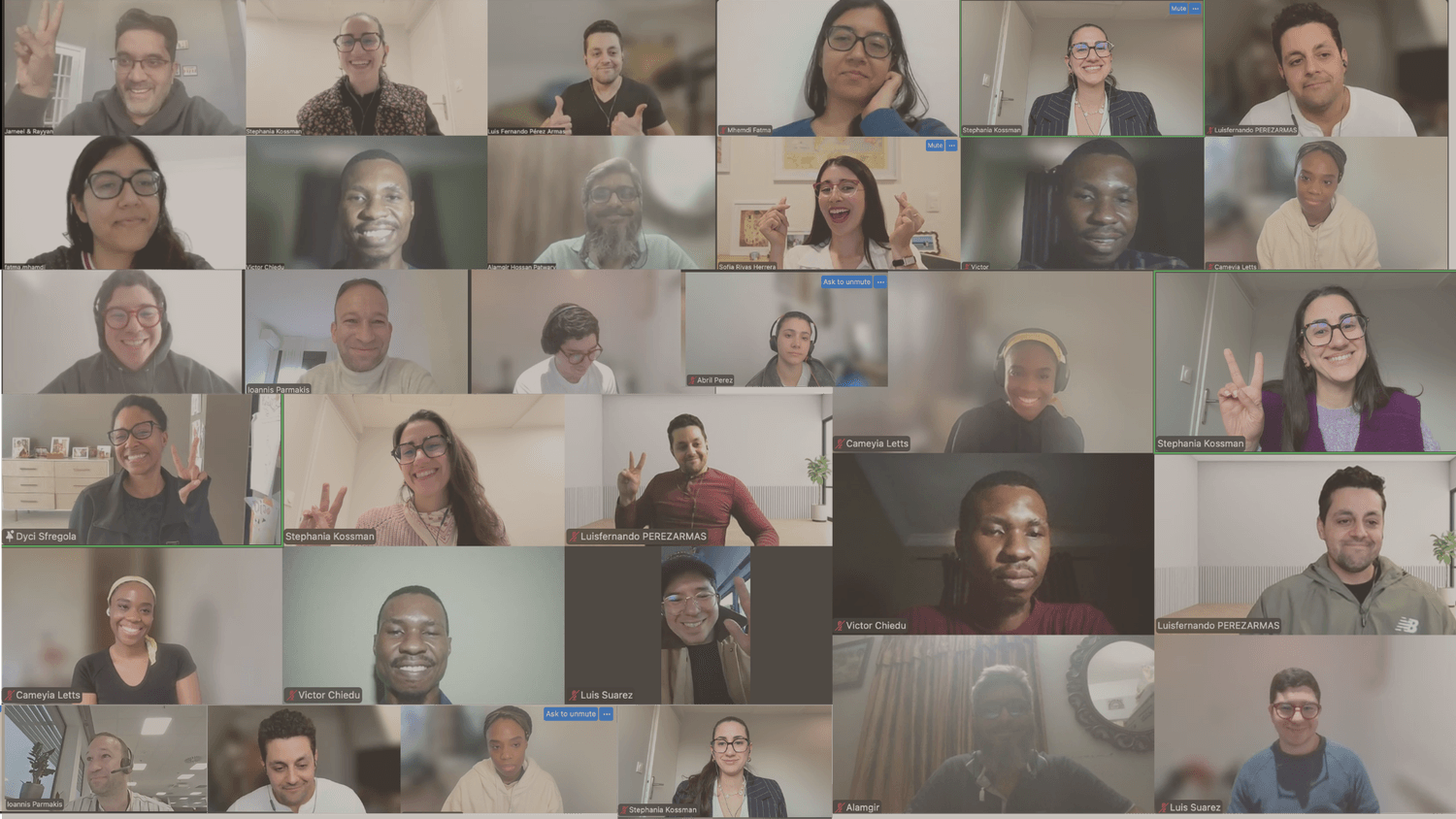
The first SCAP cohort started in November 2025. A group of supply chain professionals from across three continents, meeting live, building portfolios on real problems. The program is still running (12 months). Here's what's happened so far.
679, avenue de la République, 59800 Lille, France
email: hello@savilaeducation.com